Make
Meet people who create through inherited knowledge, technique and experimentation.
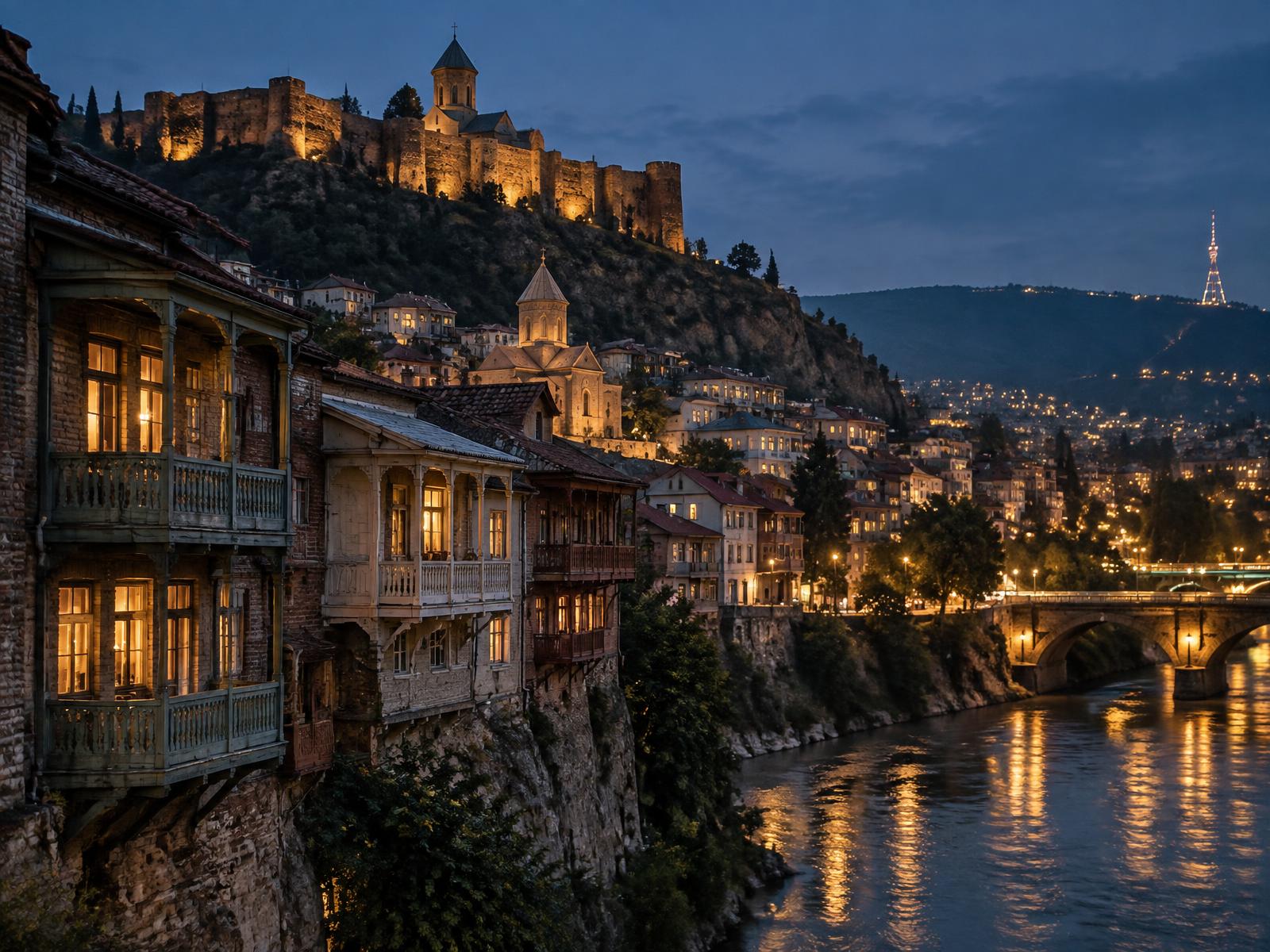
The Georgia Odyssey
A journey through Georgia, in the Caucasus.
Ten days · flexible dates.
The question
Who decides what's true about a place, once the people who lived it are gone?
In Georgia, that question is answered in many different ways.
By people who make things. By families who preserve traditions. By scientists who investigate what remains. By artists, storytellers and hosts who decide what gets remembered — and how.
This journey follows those threads.
The architecture
Meet people who create through inherited knowledge, technique and experimentation.
See what survives because someone continues to practice, protect or pass something down.
Follow evidence, archaeology and the question of how we know what we think we know.
Listen to the ways Georgia tells itself — through ritual, theatre, food, architecture, myth and memory.
A few words to carry
A few words will meet you at the beginning of your journey. Carry them with you. On your final evening, one last piece will be waiting in your room.
The Georgia Odyssey
EXT. KARTLI — MTKVARI VALLEY — 5TH CENTURY CE
KING VAKHTANG GORGASALI and his men hunt in the forest. A FALCON perches on his armored shoulder.
A PHEASANT is seen in the distance.
SOLDIER 1 lets loose an arrow.
THWUNK!
The startled bird takes short flight and lands further ahead.
The other soldiers laugh at the miss.
The King whispers to the falcon and it STREAKS off.
The camera follows the falcon in flight.
The group advances quickly after it.
They see the falcon SWOOP down and break into a run.
As they near, they discover a hidden spring. The men look panicked.
The King strides forward and swivels his head around.
KING
Where are they?
The soldier points down at the water.
SOLDIER 1
აქ!
The King follows his finger. The men stare with him.
The falcon and pheasant lie motionless in the steaming water.
The King is devastated. The soldiers spot a tear shed.
He reaches into the spring and LIFTS the falcon from the water.
The pheasant, along with his trusty falcon, has been COOKED in the heat of the water.
The King SNIFFS the air.
KING
Sulfur… This warm spring… In honor of my fallen friend and how he died, I shall call this place Tbilisi.
FADE OUT.
The itinerary
01
Day 01
Arrive — Tbilisi
Arrive, settle in, and let Georgia come to you tomorrow.
Arrival
Arrive in Tbilisi. Private airport transfer to the hotel.
Evening
Settle in. No scheduled sightseeing — a relaxed first dinner within easy reach of the hotel. The city can wait until tomorrow.
02
Day 02
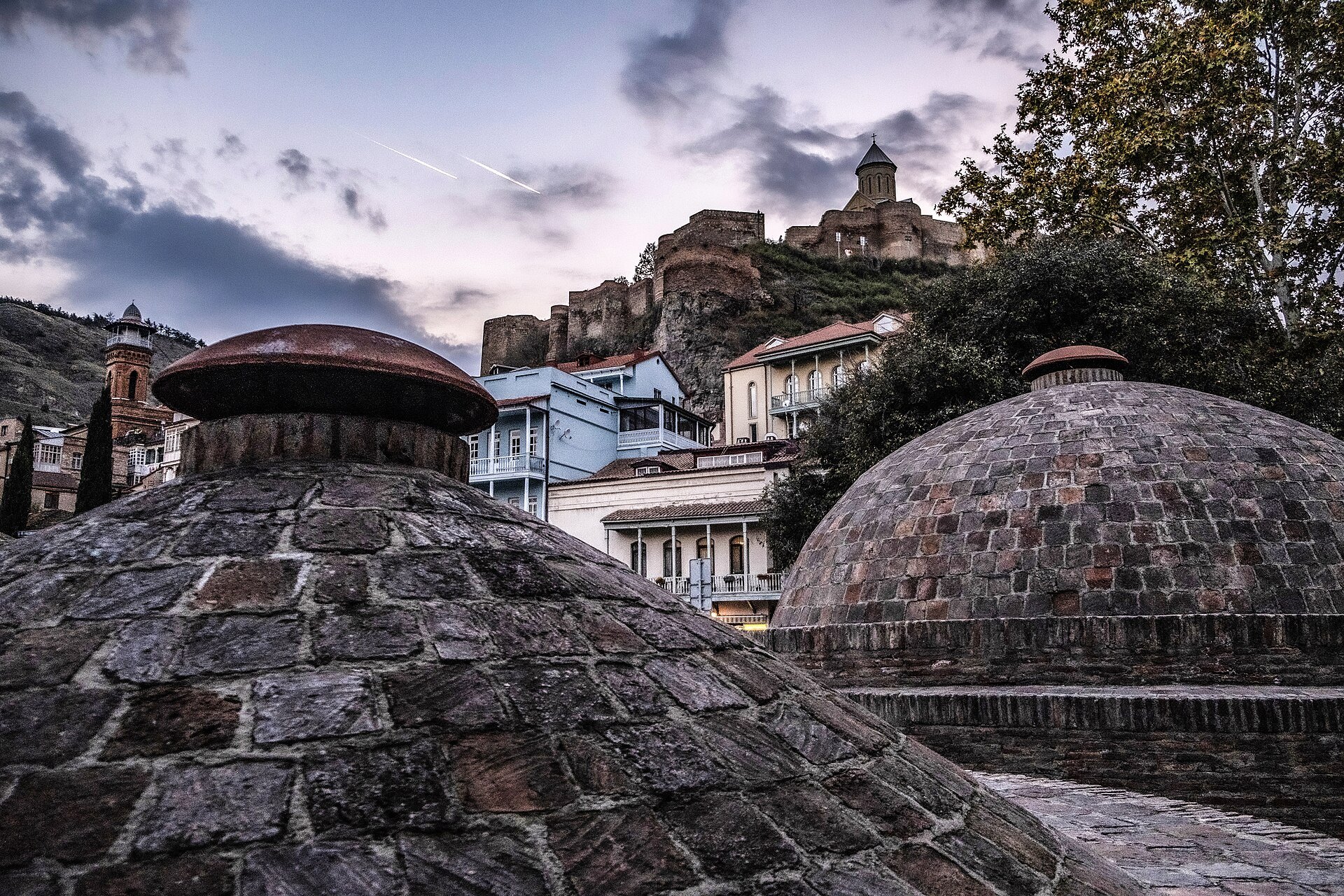
Tbilisi
The city says hello by daylight, and sings by night.
Day — A Local Welcome
Meet Mariami T, a local guide who will welcome you to Tbilisi and begin opening up the city around you. ↗
Night — Jazz
Live jazz, in a room small enough to feel it.
Zazanova Salon — small and intimate, friendly rather than performative, with the owner himself a composer and musician who sometimes performs. ↗
Jazz Cafe Singer — a genuinely tiny Old Town room on Sioni Street, with nightly live jazz from rotating musicians playing standards and original material, paired with Georgian wine. Loved by locals and visitors alike — a real working jazz room, not a staged show. ↗
The Georgia Odyssey
INT. GEORGIAN HOME — NIGHT — 1997
A humble artisan's den. A kiln radiates heat in the corner.
FATHER (60s) and DAUGHTER (20s) sit at a small table covered with gleaming pieces. Bowls of silver and gold wire, colored glass, water, brushes and tools surround them.
Father hands Daughter the tweezers. She continues the project.
FATHER
That's right. Bend the wire carefully to form a cell.
MOTHER (late 50s) enters.
MOTHER
What are you doing? What if they come back?
Father and Daughter continue working.
FATHER
They are gone. They can't take this from us anymore.
Daughter reaches for a thin strand of gold wire.
FATHER (CONT'D)
Not yet. ემალი next.
Daughter puts down the wire and reaches for a piece of colored enamel.
MOTHER
Vaime!
Mother turns to leave, then looks back.
She UNFURROWS her brow. She can't help but smile at the sight of her husband passing the craft to their daughter.
FADE OUT.
03
Day 03
Tbilisi
Up where the rooftops turn to mosaic; down where color learns to live in metal.
Morning
Take the cable car from Rike Park up toward Narikala for a view across the old city and the Mtkvari River.
Afternoon
Inside the Enamelist's Studio
Meet Nana Aziziani in her Tbilisi home studio for a private, hands-on introduction to Georgian cloisonné enamel. Nana shares the history and techniques of the craft, including her work recreating historical museum pieces.
Then work with the material yourself, learning how metal wire and colored enamel come together to make a finished piece of jewelry you can take home.
Allow approximately four hours for this private masterclass.
The Georgia Odyssey
INT. PUPPET THEATER — NIGHT — 1980s
Backstage, A DIRECTOR (40s) PEELS an inch of curtain back carefully. The audience is full of adults and kids. He spots uniformed Soviet officials sitting in the back row.
Camera pulls back to reveal a table with marionettes piled on top, strings everywhere. A STAGEHAND (20s) is trying to untangle them.
The PUPPETEER (30s) looks at the script as he works his puppets onstage for the audience.
The script has red lines through much of it.
He looks up at the Director.
DIRECTOR
I know, I know. You can't say that. (points) Or that.
Puppeteer sighs. He gracefully choreographs the puppet offstage and swaps it out for another.
DIRECTOR
It must bow. You know it must. საბჭოთა.
Puppeteer looks back at him with a GLEAM in his eye.
CUT TO:
INT. PUPPET THEATER — ON STAGE — NIGHT
The dancing marionette is in a miniature office. There is a picture of a Soviet General on its little wall.
The puppet begins to bow and then it WHIPS around so it completes the bow with its rear to the picture.
The audience HOWLS with laughter.
FADE OUT.
04
Day 04
Tbilisi
A morning with no script — until the moment you slip behind the curtain.
Morning
Explore Tbilisi during the morning.
Afternoon — Behind the Curtain
Step behind the scenes at Gabriadze Theatre for Machines of Time and Mechanisms of Memory — an English-language experience offering an intimate look at the handmade mechanisms, puppets, and theatrical world behind the productions. ↗
For two travelers, the experience can be arranged as a private backstage visit.
Approximately 60–75 minutes. Timing will be arranged around the theatre's performance schedule.
Evening — The Theatre Comes Alive
If the schedule allows, stay for a performance — seeing the world you've just encountered from the other side of the curtain. ↗
The Georgia Odyssey
EXT. DMANISI — DAY — PRESENT
Wind moves across the grass-covered hills. Sun is bright. A small team of research scientists work the site.
A LEAD RESEARCHER (40s) kneels in the dirt. A YOUNG RESEARCHER watches his superior carefully brush away loose earth.
Nearby, a tray holds fragments of stone, bone and soil.
The researcher points to the exposed earth.
LEAD RESEARCHER
We found the skull here.
He gestures toward the exposed layer.
YOUNG RESEARCHER
This ფენა?
LEAD RESEARCHER
No, that layer.
He hands the brush to Young Researcher, giving him a chance.
YOUNG RESEARCHER
Is it true he had almost no teeth left?
A beat.
LEAD RESEARCHER
Someone must have fed him.
The scientists continue their work, lost in thought.
The camera rises, revealing the enormous site stretching across the landscape.
FADE OUT
05
Day 05
Dmanisi & Orozmani
We leave Tbilisi and head south, toward a landscape where the past is preserved in the layers of the earth.
Inside the Archaeological Landscape
At Dmanisi and Orozmani, the ground holds evidence of some of the earliest human presence beyond Africa.
You'll meet Giorgi Bidzinashvili, who has spent more than two decades working with the Dmanisi excavation team and now leads research at Orozmani. Rather than following a standard archaeological tour, you'll have time with someone directly involved in the work: exploring the discoveries, reading the geological layers, and learning how researchers investigate the traces left by early humans.
The private experience lasts approximately two to three hours and supports the ongoing research.
Evening
Return to Tbilisi.
The Georgia Odyssey
INT. GLDANI BUNKER — DAY — PRESENT
A flashlight beam crosses rusted dials and old gauges. A wall map has gone soft at the corners.
JOVANNI runs a finger along the rubber seal of a massive hermetic door.
The GUIDE watches him.
GUIDE
Every room down here had one job.
He points toward a bank of old equipment.
GUIDE (CONT'D)
Communication. Ventilation. Power. Everything had a backup.
He opens a heavy cabinet.
Empty.
HENAH
What was kept here?
GUIDE
I don't know. It was emptied long ago.
Jovanni looks at the equipment. Then down the corridor.
JOVANNI
So everything had a purpose.
The Guide nods.
GUIDE
მართვა. Everything under control.
Henah and Jovanni look down the corridor.
Door after door. Room after room.
All of it built for a future that never came.
We can only hope it never will!
FADE OUT.
06
Day 06
Tbilisi
Look at what Georgia kept — factories and printing presses. Now go below.
Fabrika
A factory gets a second life
Once a Soviet sewing factory, Fabrika has become a creative complex of cafés, studios, shops, and gathering spaces.
Explore the courtyard and surrounding spaces, then pause for coffee or a relaxed vegetarian-friendly lunch. There's no prescribed route here.
Stamba
Where the printed word gets a new life
The old machinery, enormous industrial spaces, books, greenery and light are still in conversation here. What was once built to produce the printed word now feels like a place built for ideas.
Underground
What's still buried beneath the city?
Then go below the surface.
An underground Soviet-era bunker offers a very different encounter with the same history — infrastructure built for a world of secrecy, uncertainty, and preparation.
07
Day 07
Tbilisi
The voices that stayed, the stories that survived — and one only you can finish.
Writers' House of Georgia
Where the story becomes personal
Begin at Writers' House, a 1905 Art Nouveau mansion in Sololaki and an important place in Georgia's literary history.
The Museum of Repressed Writers traces the lives and work of writers whose careers were disrupted or destroyed during the Soviet purges.
Here, the Blue Horns become people rather than names: writers whose lives were shaped, and in some cases destroyed, by the political world around them.
Mtatsminda Pantheon
Where they are remembered
Continue by funicular to Mtatsminda, where many of Georgia's most important writers and cultural figures are buried.
There's no need to make this a formal tour. Take the time to explore the grounds at an easy pace, with the city spread below.
— or —
Tea
A quieter story of survival
Later, settle in at the Bitadze Tea Museum — a historic tea house and museum in a 19th-century cellar near Freedom Square, kept by the Bitadze family.
Georgian tea has its own complicated history — from a major Soviet-era industry to near collapse after independence, followed by a small but growing revival of local production.
This is a chance to meet that story through the people, objects, and teas themselves.
TTE Rooms
A story you have to solve
Then, for a little while, the rules change.
You’ll take on an English-language escape room — a chance to play, puzzle, and solve something together. The room will be selected closer to your trip from whatever TTE Rooms is running at the time.
And since you both love escape rooms, this one is here because you do.
08
Day 08
Georgia
Three possible paths. This day is yours to choose.
Gori
History, memory, and a living craft tradition.
Visit the Stalin Museum and Gori Fortress, then meet a Georgian ceramicist whose family has practiced the craft across six generations.
Day eight is yours to choose.
09
Day 09
Tbilisi
One slow morning to say goodbye — and let the city keep a few things for next time.
One last day
Dry Bridge for souvenirs, a missed museum, or one more soup dumpling.
One Last Thing
Before you leave Tbilisi, make sure you have the final piece waiting for you at the hotel. If it hasn't found its way to you yet, ask the front desk.
The Georgia Odyssey
INT. SOLOLAKI — MZIANI CAFÉ — EVENING
A tiny room. Steam clouds the windows.
Behind the counter, hands move quickly through flour and dough.
Henah watches as a dumpling takes shape between the woman's fingers.
Jovanni sips a tarkhun. A couple bottles of Borjomi sit on the table.
A WAITRESS (40s) arrives with some dishes.
WAITRESS
Here is your lobio and badrijani nigvzit.
She sets down a colorful plate of slow-cooked beans with onions and herbs. The aroma WAFTS over them.
Then she sets down the eggplant rolls filled with walnut and garlic.
WAITRESS (CONT'D)
Did you also order the mushroom khinkali?
HENAH
Actually, cheese with მწვანილი.
WAITRESS
Right! Cheese with herb. Those dumplings will be right out.
JOVANNI
The mushroom sound really good too …
WAITRESS
Order it the next time. We welcome you back.
TO BE CONTINUED…
10
Day 10
Depart Tbilisi
The journey home.
Departure
Depart Tbilisi.
The inside track
The things worth knowing before you're standing there.
Field Note
Georgia's famous table is often associated with meat, cheese, bread, and wine. But its culinary tradition also has a remarkably rich vegetarian repertoire.
Part of that comes from the Georgian Orthodox calendar, which includes periods of fasting when observant people avoid meat, dairy, and eggs. Over generations, cooks developed substantial dishes built around beans, walnuts, eggplant, mushrooms, greens, grains, and vegetables — food designed to be satisfying rather than simply substituting for meat.
You'll encounter dishes such as lobio (seasoned beans), pkhali (vegetables or greens combined with walnut and herbs), ajapsandali (eggplant, peppers, tomatoes and herbs), and a wide range of vegetable preparations and breads.
Tbilisi
Rezo Gabriadze's theatre is small, but its visual language is enormous — writing, marionettes, sets, ceramics and the famous clock tower all belong to one artist's complete world.
The puppetry matters because of when it was made. Under Soviet censorship, the stage became a place to speak sideways.
Dmanisi & Orozmani
The centerpiece is the active archaeological landscape around Dmanisi and Orozmani, where extraordinarily early evidence of human occupation has been found. Dmanisi holds approximately 1.8-million-year-old hominin evidence, while Orozmani, about 20 km away, is part of the same research program.
The person who makes this especially compelling is Giorgi Bidzinashvili — 20+ years on the Dmanisi excavation team, and since 2019 he discovered and leads the Orozmani site (the related Early Pleistocene site near Dmanisi), where he's run a multidisciplinary field school since 2021. He led the team that discovered a new 1.8-million-year-old hominin tooth at Orozmani in 2022 and runs an international field school there.
Giorgi has offered a private, off-season Orozmani experience that is much more like being taken inside the research than being given a standard archaeological tour. The proposed 2–3 hour experience can include the site's history, stratigraphy — how the layers of the earth are read — the landscape itself, raw-material procurement, experimental Oldowan technology, and, if the season permits, observation of active excavation.
Fabrika
Fabrika occupies a former Soviet sewing factory built in the 1960s. During the Soviet period, the building belonged to Georgia's state-run textile industry, producing garments within a highly centralized manufacturing system.
After independence, the factory ceased operating. In 2016, the building reopened as Fabrika, transformed into a mixed-use creative complex while retaining much of its industrial architecture.
Today its former production spaces hold cafés, studios, shops, workshops, and gathering places.
Stamba
Stamba occupies a former publishing and printing complex built in 1961 on Merab Kostava Street. The site was known as a “printed word combine” — a large Soviet production complex for newspapers and other printed material.
The building housed the editorial offices of publications including Kommunisti and Samshoblo. Its enormous industrial spaces were designed around the physical production of print.
When the site was redeveloped as Stamba, elements of the original machinery and printing infrastructure were deliberately retained.
Today the former printing complex contains a hotel, restaurants, creative spaces, a bookstore, and an extensive collection of books — including Georgian literature in English translation.
Underground
During the Soviet period, Tbilisi developed an extensive network of underground shelters and bunkers as part of the wider Soviet civil-defense system.
These spaces were designed for a city living under the possibility of military attack: communications, emergency operations, protection of personnel, and continuity of essential functions could all be moved below ground.
After the collapse of the Soviet Union in 1991, much of that infrastructure lost its original purpose. Some spaces were abandoned; others were repurposed or opened to the public.
The bunker offers a different way of encountering the Soviet past from Fabrika and Stamba.
Those buildings show what was left behind and reinvented. The bunker shows what was built to survive.
The Blue Horns
In the 1910s and 1920s, a circle of Georgian symbolist poets known as the Blue Horns helped create a modernist literary culture in Tbilisi. Among them were Titsian Tabidze and Paolo Iashvili, poets who gathered with artists and intellectuals to read, argue, drink, and experiment with new forms.
One of their meeting places was Kimerioni, a cellar café whose walls were painted by avant-garde artists. The café closed in 1922, but its murals survive in the lower foyer of the Rustaveli Theatre.
Boris Pasternak became a close friend of the Georgian writers and translated their work.
Then came the purges.
In 1937, Paolo Iashvili died by suicide rather than face the pressure being brought against him and his fellow writers. Titsian Tabidze was arrested and executed.
Their stories form part of a larger question that runs through this journey:
Who gets to tell a nation's story — and what happens when someone else decides what may be remembered?
Kimerioni
The café itself is gone, but its murals survive.
The former Kimerioni space is now part of the lower foyer of the Rustaveli Theatre, allowing a glimpse of the artistic world surrounding the Blue Horns without pretending the original café still exists.
This is a contextual stop, not a separate destination.
Georgian Tea
Georgia developed a major tea-growing industry during the Soviet period, particularly in the humid western regions of the country.
After the collapse of the Soviet Union in 1991, the industry declined dramatically. In recent years, small growers and producers have been working to revive Georgian tea through smaller-scale, often more traditional production.
At Bitadze Tea Museum, the story is encountered through tea itself — along with objects and knowledge connected to Georgia's tea history.
Where you sleep
Four ways to make Tbilisi home.
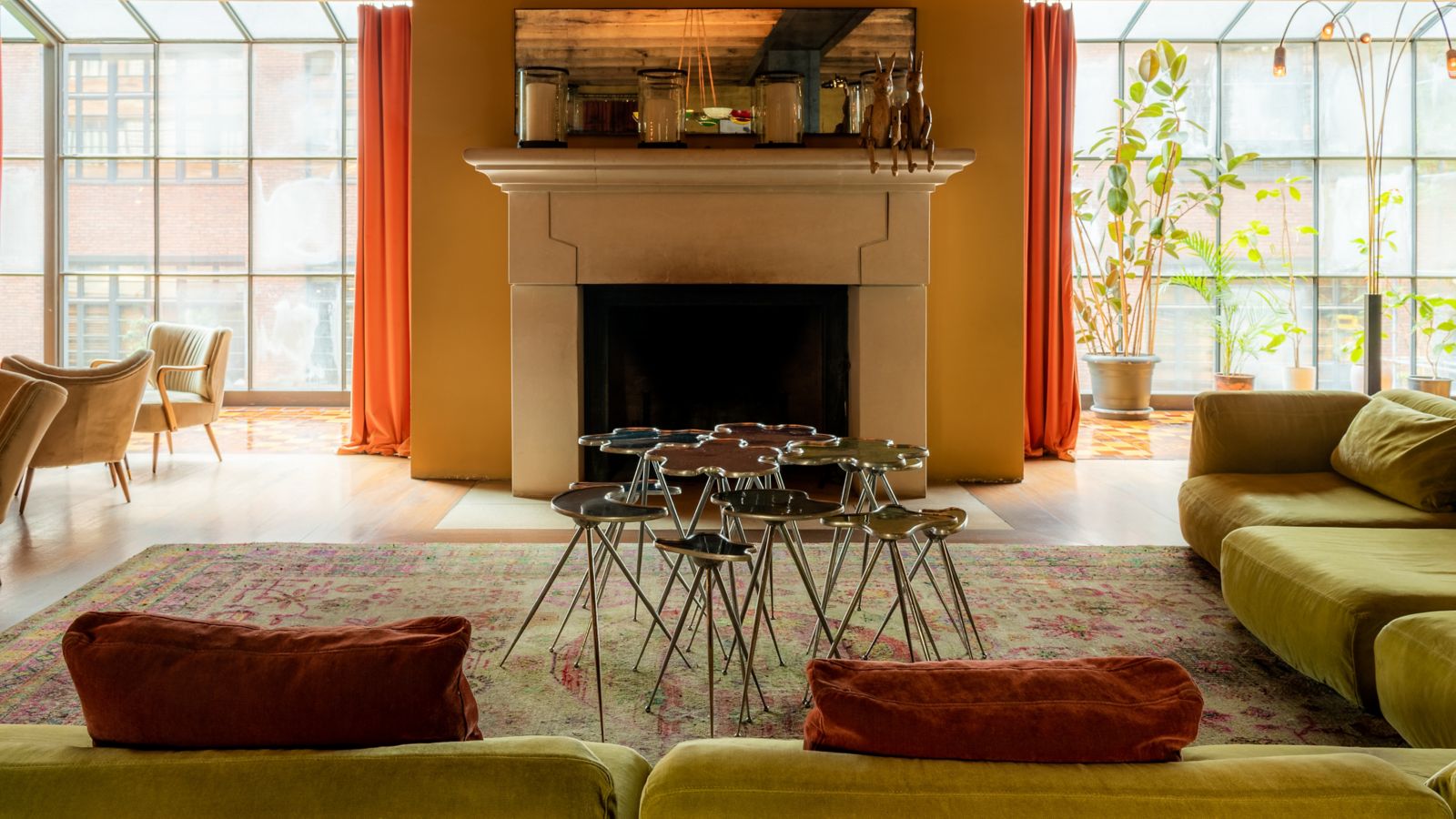
The story in the walls
A converted publishing house in the Vera neighborhood, with an artful industrial character, library, garden and a lively neighborhood around it. A strong balance of comfort, design and local atmosphere.
Visit the hotel ↗Photo: Rooms Hotel Tbilisi
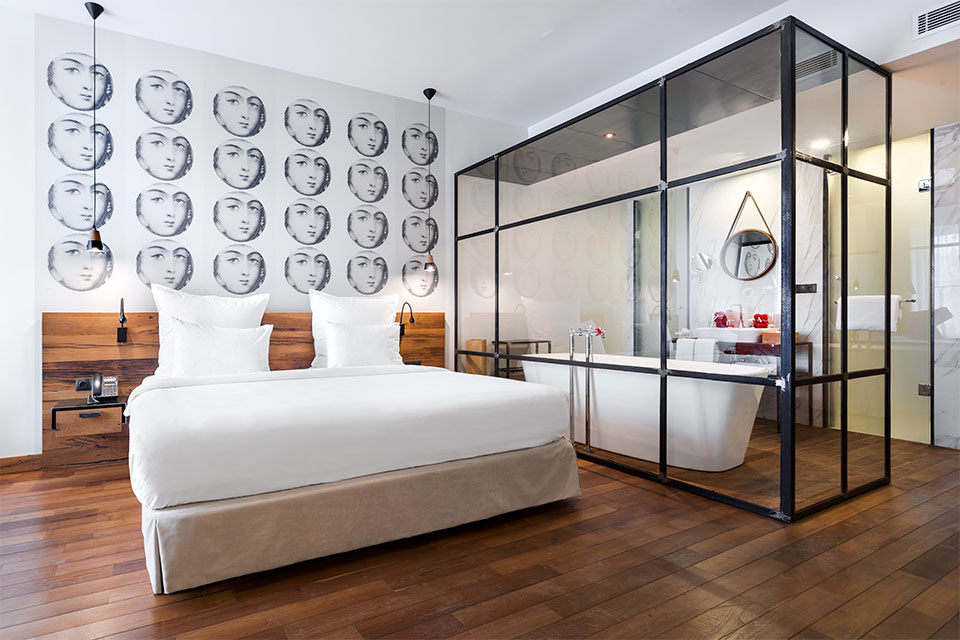
The quiet classic
A quieter, more classic boutique-hotel option in the heart of Tbilisi, close to the city's museums, theatre and Rustaveli Avenue. Comfortable and practical, with plenty of room to retreat between experiences.
Visit the hotel ↗Photo: Shota @ Rustaveli
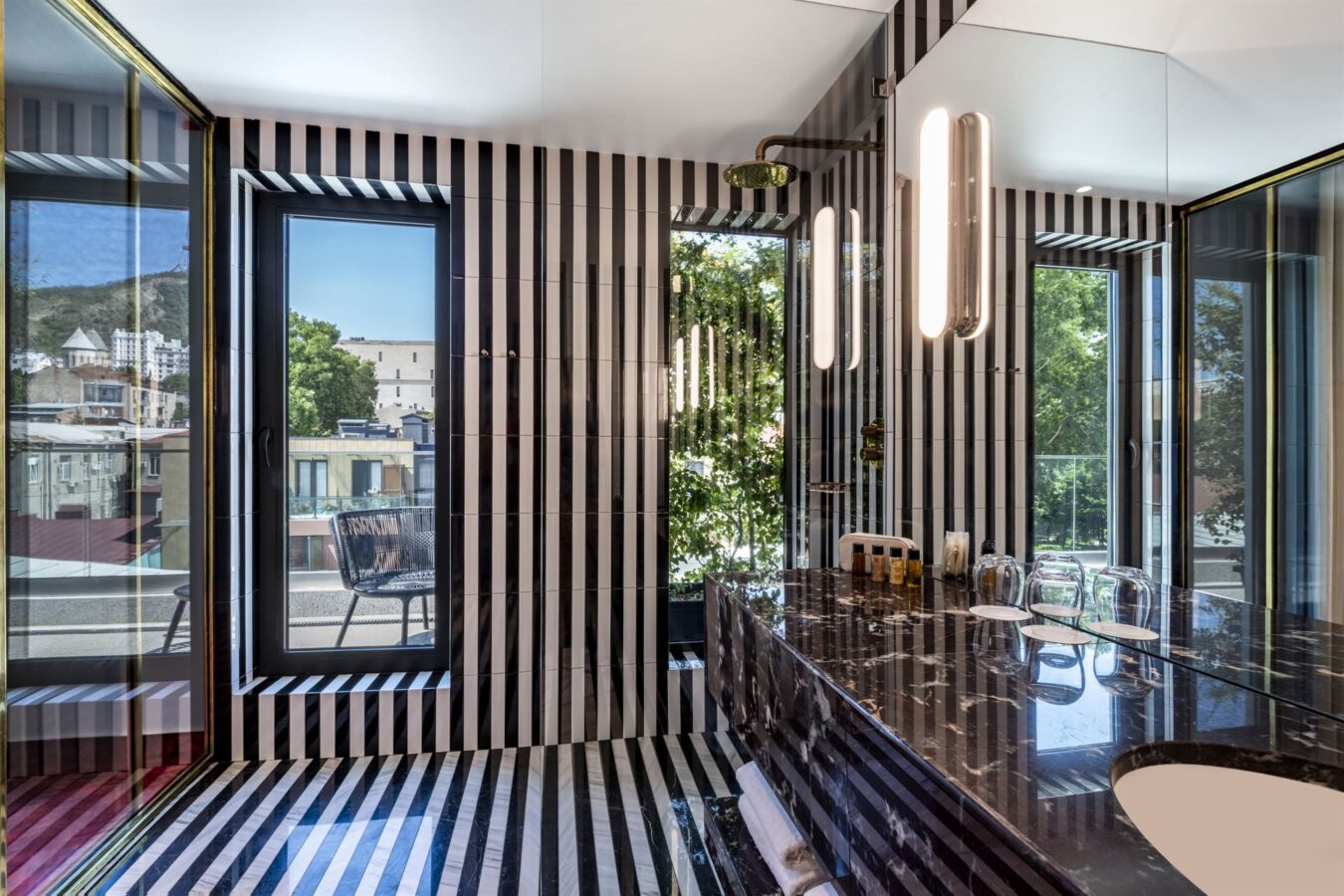
The intimate one
A smaller design hotel near Orbeliani Square, with a more intimate scale and a strong connection to the neighborhood's food and everyday city life.
Visit the hotel ↗Photo: Bazzar Boutique Hotel
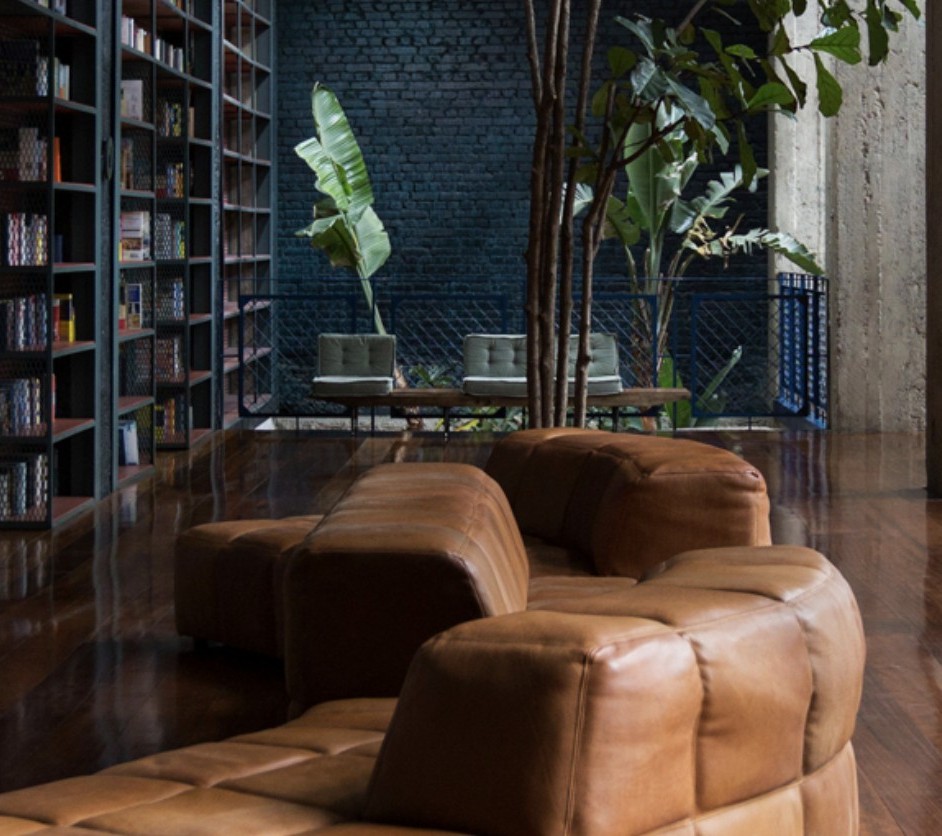
The wildcard
A former publishing house transformed into one of Tbilisi's most distinctive design hotels — part hotel, part cultural space. More of a splurge, but potentially worth considering if the hotel itself becomes part of the experience.
Visit the hotel ↗Photo: Stamba Hotel
Before dates are set
Exchange rate: 1 Georgian lari (GEL) ≈ $0.385 USD. USD amounts below are approximate.
Arrival · Day 1
Private airport transfer to the hotel in Tbilisi. No scheduled activities on arrival day.
Private guide · Day 2
Meet Mariami T via ToursByLocals, a local guide who will welcome you to Tbilisi. ↗
I have connected with Mariami and she is excited to work with you.
Jazz · Day 2
Makers · Day 3
Nana Aziziani — traditional metalwork and cloisonné enamel. Alongside the history, traditions and techniques of the craft, she shares her own experience recreating historical museum pieces. ↗
The visit is a hands-on masterclass: around 4 hours, working with the material yourself to make a piece of cloisonné enamel jewelry to take home.
$120 (≈ 310 GEL) per person for two participants, or $150 (≈ 390 GEL) for a single visitor. The silver piece is charged separately according to its weight and the complexity of the design — typically adding 30–50% to the workshop fee.
Booking: Odyssey Studio will make the introduction to Nana Aziziani so you can connect directly to arrange timing and availability for your private masterclass.
Rike–Narikala cable car — 2.5 GEL (≈ $0.96) per person, each way; the ride itself is only a couple of minutes. ↗
Payment is by Metromoney transport card only — cash isn't taken at the cabins. The card costs 2 GEL (≈ $0.77), is reusable, and one card can pay for several passengers — just top it up for two.
Afternoon: Nana's cloisonné workshop.
Exploring Tbilisi · Day 4
VoiceMap — paid, story-driven audio walks, more narrative and atmospheric than fact-based stops if you're looking for real voice and pacing rather than a checklist. ↗
Gabriadze Theatre · Day 4
I've been in touch with Gabriadze Theatre about Machines of Time and Mechanisms of Memory, and they can offer the experience in English as a private backstage visit for two. ↗
The experience lasts approximately 60–75 minutes and is 70 GEL (≈ $27) per person, with a 700 GEL (≈ $270) minimum for a private experience for fewer than 10 participants.
Timing depends on the theatre's performance schedule: generally 11:00–13:00 on two-performance days, or 11:00–16:00 on days with one performance. The theatre is closed Mondays.
The performance schedule is usually published about one month in advance. Once dates are fixed, the theatre will help identify the best day and timing so you can explore pairing the backstage experience with a performance.
Dmanisi + Orozmani · Day 5
At Orozmani you are hosted personally by Giorgi Bidzinashvili, 20+ years on the Dmanisi excavation team, and since 2019 he discovered and leads the Orozmani site (the related Early Pleistocene site near Dmanisi), where he's run a multidisciplinary field school since 2021. ↗
Giorgi's reply: “Your bespoke approach to travel aligns perfectly with how we believe such significant archaeological landscapes should be experienced. I would be delighted to personally host your two travelers at Orozmani.”
In the off-season — our May timing — he offers a private masterclass and field walk of roughly 2–3 hours: the full story of the site's discovery, reading its layers and landscape, and a hands-on demonstration of how early humans selected local stone and shaped it into tools. $400 total, which supports the research site.
If your dates ever stretch to July or August, the active excavation season opens something rarer still: the chance to witness — and even briefly join — real fieldwork on a 1.8-million-year-old site, alongside an international scientific team.
Booking: Odyssey Studio will make the introduction to Giorgi Bidzinashvili so you may communicate directly as you know your dates and timing.
Soviet Reimagined · Day 6
Fabrika — 8 Egnate Ninoshvili Street, Tbilisi. ↗
Stamba — 14 Kostava Street, Tbilisi. ↗
Underground Soviet Bunker — the bunker's location is shared once booked; the tour runs as an urbex visit led by a local operator, bookable through TripAdvisor. ↗
The same tour, bookable through GetYourGuide — the same local operator runs it on both platforms, so either link works. ↗
Accessibility: an urbex bunker means stairs, uneven ground, and low ceilings — verify with the guide or your hotel before booking if either of you has mobility concerns.
The Stories That Remain · Day 7
Writers' House of Georgia — 13 Ivane Machabeli Street, Sololaki. ↗
Mtatsminda Pantheon — take the funicular up; the Pantheon sits at the mid-slope Pantheon stop, beside the 19th-century Mamadaviti Church. The lower funicular station is on Chonkadze Street, a short walk from Rustaveli Avenue. ↗
Kimerioni murals — a contextual stop: the surviving murals of the 1920s cellar café are in the lower foyer of the Rustaveli Theatre, 17 Rustaveli Avenue. ↗
Bitadze Tea Museum — 15 Galaktion Tabidze Street, near Freedom Square. ↗
Escape Room · Day 7
TTE Rooms — English-language room; 2–6 players. ↗
30 GEL (≈ $12) per person · 35 GEL (≈ $13) per person at weekends.
I connected with them directly through Facebook Messenger and they confirmed the English room.
Choose Your Own Adventure · Day 8
I have been in conversation with Mukhran as we shaped two possible Day 8 excursions — Preserve & Discover in Kakheti and Ascend & Wonder on the Military Highway — and he will be your private guide and driver for either. ↗
Mukhran has been guiding since 2016, and once a day is confirmed, he personally leads it — he never passes his guests to another guide or driver.
His tours are built on Georgian history, culture, food, and wine — local food recommended at just the right moment in each region, and stories that reach beyond the history books into Georgia's modern life.
He designs every route around the time you have, the season, and your interests — he understands there is no hiking and knows your mobility needs, and shapes the day accordingly — varying the stops and keeping long hours in the car to a minimum, so the day is spent in experiences rather than in driving.
For a full day with transportation and him as your private guide, his rate is €200.
Contact: mukhrang@gmail.com ↗
WhatsApp: +995 577 148 422
Stay & Listen · Day 8 choice
Gori is an easy day to explore on your own — no private guide needed. What you'll want to arrange is private transportation for the day: a driver to take you to Gori, wait while you visit the museum, the fortress, and the artisan, and bring you back to Tbilisi by evening.
Your hotel can arrange a trusted driver, or Daytrip lets you book a fixed-price private car online in advance. ↗
Budget around $115 for the day — the driver stays with you for all the stops and returns you to Tbilisi.
Preserve & Discover · Day 8 choice
A private day in Kakheti with Mukhran Guliashvili — your guide and driver for the day, at the same private full-day rate (€200). Kakheti — Georgia's eastern region of green valleys, hilltop monasteries, and long views toward the Caucasus. It is the heartland of Georgian winemaking, a tradition reaching back some 8,000 years, and a landscape made for slow travel: small towns, quiet roads, and a pace set by the seasons.
Zegaani Monastery — one of the oldest monasteries in Kakheti, its origins reaching back some 1,500 years, set in a quiet forest above the valley. Its stone churches and shaded grounds offer a moment of stillness at the start of the day.
The qvevri maker — qvevri are the great clay vessels buried in the earth where Georgian wine is made, and meeting a maker means meeting the craft itself: clay shaped by hand, coil by coil, into vessels built to last generations. It's a visit about the craft, not about tasting — there's no need to drink.
King Erekle's Palace — King Erekle II ruled eastern Georgia in the 18th century, steering the kingdom of Kartli-Kakheti between powerful neighboring empires. The palace brings the day's craft and landscape into the world of kings, alliances and neighboring empires.
The 900-year-old tree — a living landmark that has stood through centuries of change.
Ascend & Wonder · Day 8 choice
A private day on the Georgian Military Highway with Mukhran Guliashvili. The day begins at Ananuri, a fortified complex of stone towers and a small domed church standing above the Aragvi reservoir — time to wander before the road climbs. From there the highway follows the river through forested gorges until the landscape opens at the Gudauri pass, where the Friendship Monument sweeps above the valley in a curve of painted murals.
If you wish, the road continues — an optional extension to Kazbegi and Gergeti, where Gergeti Trinity Church stands alone on its ridge beneath one of the Caucasus' great peaks. Whether you go that far is decided on the day itself: weather and traffic on the high pass can slow the drive, sometimes by an hour or two, and Mukhran reads the conditions as you go and shapes the day around them.
Late May brings green valleys and mountain wildflowers, but mountain weather and traffic can change the character of the day. Snow can cause 1–2 hours additional route delay.
For Henah & Jovanni